
Features
Operating principle
The master reel is unwound and then slit lengthwise by blades, razor blades, or circular knives, which separate it into strips. Each strip is then rewound onto a mandrel. Tension control ensures even winding of the daughter reels.
Integration
The slitter-winder processes the roll before it is used in printing, converting, or packaging. It operates autonomously, with unwinding on one side and rewinding on the other.
Options & configuration
Razor blade or circular knife cutting, adjustable slit width, differential rewinding mandrels, tension control, various mother and daughter reel formats, processing of paper, polyethylene, aluminum, PET and composites.
Benefits
Precise formatting of the reels.
Regular winding thanks to tension control.
Versatility of media, from paper to aluminum.
Adjustable splitting width.
Daughter reels ready for printing or packaging.
High production speed.
The specialists in the slitter winder

DCM ATN
Printing and converting machines for flexible packaging: gravure, flexo, coating, slitting.
Foodand beveragescosmeticspharmaceuticals
Primary packagingSecondary packagingPackaging machines
Expert images
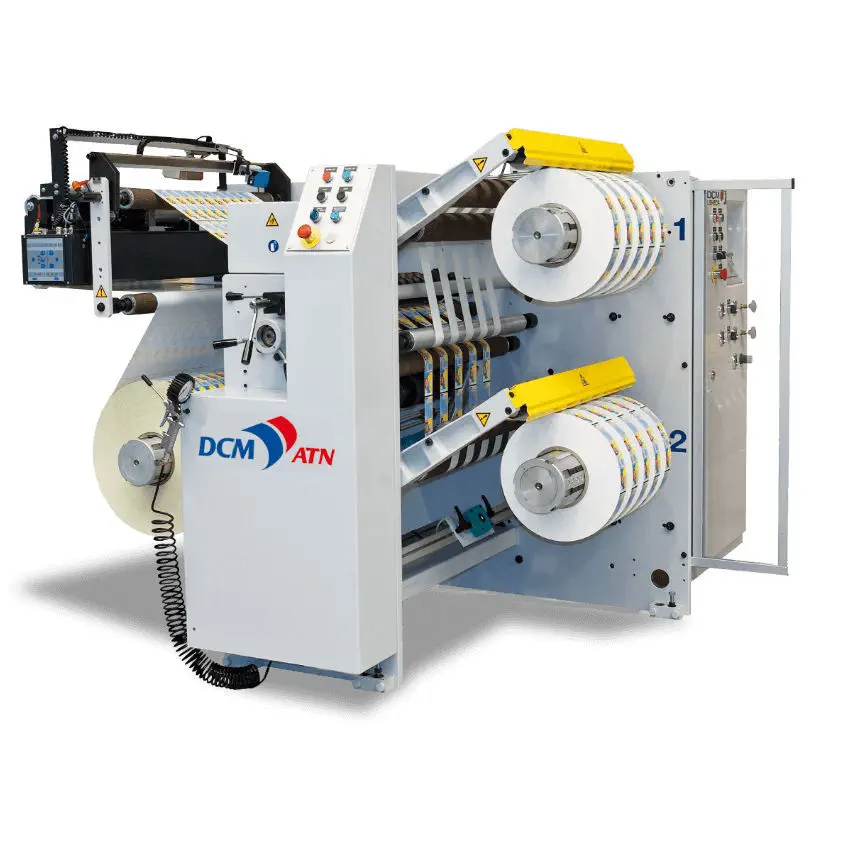
DCM ATN slitter winder
FAQ.
What is splitting?
This involves cutting a wide master reel into several narrower daughter reels lengthwise. The slitter rewinder performs this cut and then rewinds each strip.
What's the difference with a rewinder?
The slitter-winder cuts the reel widthwise before rewinding it. The rewinder simply rewinds a reel, often to check it or change the core, without slitting it.
What materials can be split?
Paper, polyethylene or PET film, aluminum, multilayer composites and labels.
Razor blade or circular knife: what's the difference?
The razor blade cuts through thin and flexible films; the circular knife, by shearing, is suitable for thicker or abrasive materials.
Why check the voltage during rewinding?
Controlled tension prevents creases, telescoping and winding defects, and ensures regular and usable daughter reels.
